
Stratasys launched the F870 on September 9, 2026. Two days later, it already has Toyota and Rivian on the floor with it. That is not a typical product launch. This page covers what the F870 is, what it can do for automotive manufacturing, how it compares to the F770, and why two of the most closely watched names in vehicle production are assessing it before commercial availability even begins.
What is the Stratasys F870?The Stratasys F870 is a large-format industrial FDM 3D printer with a 1,000 x 610 x 610 mm build volume, a fully heated chamber up to 95°C, and a material set built around production-support tooling, fixtures, manufacturing aids, and selected end-use parts.
It holds the longest heated build capacity in its class. The fully heated chamber matters for dimensional consistency on large printed tools. New N-series print heads, including a hardened head for Nylon 12CF, expand the material options available to manufacturing teams. Larger 4,100 cm3 material spools, shared with the F3300 platform, support up to two weeks of continuous unattended printing. Integrated material drying and automatic material changeover keep long builds running without operator intervention.
The F870 is being showcased at IMTS 2026, Booth 338460, South Hall, Chicago, September 14–19, 2026.
For CADimensions' full announcement on the F870, see: Big Parts, Bigger Possibilities: Meet the Stratasys F870
What does the F870 mean for automotive manufacturing?
The F870 is designed for the equipment that helps build cars, not the cars themselves. Large-format FDM can shorten the path from a factory-floor problem to a purpose-built fixture, gauge, manufacturing aid, or ergonomic tool. The table below shows where that matters most.
| Factory-floor challenge | Conventional approach | What large-format FDM changes | Automotive example |
|---|---|---|---|
| A fixture or check gauge is needed quickly | Design goes to a machine shop; teams wait for quotation, machining, delivery, and revisions | Production engineering can produce and validate a polymer tool in-house, then revise and reprint as needed | Assembly fixtures, drill guides, positioning tools, inspection gauges |
| A tool is too heavy for an operator | Metal tools are durable but heavy, creating ergonomic strain during repetitive use | Lightweight polymer tools can be designed around an operator's grip, reach, and task | Toyota redesigned a door-assembly fixture to be lighter and more ergonomic |
| A process changes during a vehicle launch | Revised tooling may require another outside procurement cycle | Engineers can produce temporary bridge tooling while permanent equipment is being finalized | Launch aids, engineering-change tools, temporary production fixtures |
| A low-volume or rarely used tool breaks | Plants need to find a supplier, recreate drawings, or wait for a replacement | Approved CAD files can serve as a digital spare-parts library for on-demand replacement | Legacy-program tooling and replacement shop aids |
| A large tool needs to be made in one piece | Smaller printers require splitting, joining, and post-processing | The F870's 1,000 mm build length can support larger fixtures without breaking every design into segments | Large check fixtures, structural assembly aids, robot end-of-arm tooling |
| A robot needs a lighter gripper | Metal end-of-arm tooling adds payload and can limit speed or reduce available payload margin | Carbon-fiber-reinforced nylon can enable stiff, lighter grippers for suitable applications | Lightweight end-of-arm tooling, custom robotic grippers |
Source: Stratasys F870 product information; Toyota manufacturing examples from Stratasys, August 7, 2025. Toyota examples involve Toyota's existing additive manufacturing program and predate the F870.
 The F870's fully heated build chamber reaches 95°C , critical for dimensional accuracy on large tools. Source: Stratasys.
How does the F870 compare to the F770?
The F870 and F770 share the same large-format build envelope, but the F870 adds the material strength, thermal control, and workflow automation that make larger printed tools more viable for demanding factory-floor applications.
| Category | Stratasys F770 | Stratasys F870 | Why it matters |
|---|---|---|---|
| Build volume | 1,000 x 610 x 610 mm | 1,000 x 610 x 610 mm | Both can produce large parts, fixtures, and tooling aids |
| Core materials | ASA and ABS-M30 | Nylon 12CF, ASA, ABS-M30, FDM ABS Draft | Nylon 12CF adds a carbon-fiber composite option for structural fixtures and tooling |
| Heated chamber | Large-format enclosed industrial FDM | Fully heated up to 95°C | Thermal control improves dimensional consistency and warpage control on large tools |
| Carbon-fiber capability | Not positioned around Nylon 12CF | Supports FDM Nylon 12CF | Enables more robust tooling, grippers, and fixtures that require stiffness and durability |
| Material handling | Standard material workflow | Integrated drying and automatic material changeover | Supports longer unattended print jobs and manages moisture-sensitive materials |
| Print head options | Standard F770 configuration | New N-series heads including hardened head for Nylon 12CF | Allows configuration for higher-volume tooling or carbon-fiber composite applications |
| Spool capacity | F770-format materials | Compatible with 4,100 cm3 spools shared with the F3300 | Reduces material-change interruptions during long, large-format jobs |
| Best-fit positioning | Large-scale prototypes and large ABS/ASA parts | Production-support tooling, fixtures, manufacturing aids, durable prototypes, and selected end-use parts | The F870 is more compelling when large size must be paired with composite strength, thermal control, and unattended productivity |
Source: Stratasys F870 and F770 product information. Verify final commercial specifications with Stratasys before procurement decisions.
 The three new N-series print heads: N14 for precision, N20H hardened for Nylon 12CF, and N25 for high-speed throughput. Source: Stratasys.
What are Toyota and Rivian doing with the F870?
Toyota Production Engineering in Georgetown, Kentucky, and Rivian Automotive in Plymouth, Michigan, have both installed the F870 and are assessing it for factory-floor tooling, manufacturing aids, and prototyping workflows ahead of commercial availability.
Toyota: Georgetown, Kentucky
Toyota's Georgetown plant is the company's largest manufacturing facility in the world, producing the Camry Hybrid, the all-new RAV4 Hybrid, and preparing for production of the all-electric Highlander SUV later in 2026. It is one of the most active vehicle assembly operations in North America, with nearly 10,000 employees and 550,000 vehicles produced annually.
 Toyota's Georgetown, Kentucky facility , the company's largest plant in the world , now produces the Camry Hybrid, RAV4 Hybrid, and the upcoming electric Highlander. Source: Toyota/Lane Report.
Dallas Martin, Additive Manufacturing Engineer at Toyota North America, described what the platform addresses: "We've already seen the value Stratasys additive manufacturing can deliver. The next challenge is expanding its use across more applications. The F870's combination of build size, material performance and industrial features aligns with the kinds of manufacturing needs we're looking to address."
Rivian: Plymouth, Michigan
Rivian's Plymouth facility is the company's engineering and prototype manufacturing hub. The R1T electric pickup truck and R1S electric SUV are the primary vehicles developed there. Both are produced at Rivian's main assembly plant in Normal, Illinois. Plymouth is where Rivian's development teams iterate on design, test prototypes, and validate tooling before committing to full production.
 The Rivian R1T , prototyped and engineered in Plymouth, Michigan, produced in Normal, Illinois. Source: Rivian.
Jonathan Dankenbring, Rivian's senior manager of prototype manufacturing, has described the need to iterate quickly, test designs before committing to expensive tooling, and connect development decisions to a practical production path. For a team that builds prototypes by hand before production begins, faster in-house tooling changes the pace at which design decisions can be tested and confirmed.
The launch announcement identifies both companies as early adopters assessing the platform. It does not disclose purchase quantities, companywide deployment commitments, or F870-specific performance results for either organization.
What has 3D printing already changed on Toyota's factory floor?
Toyota's existing additive manufacturing program, built around Stratasys technology, has already demonstrated that faster in-house tooling can change how assembly work gets done. These results predate the F870 and reflect Toyota's broader Stratasys ecosystem, which includes F3300, F900, F770, Neo800, H350, and other systems across North American facilities.
 A 3D printed transmission test tool from Toyota's ADD Lab, produced on the Stratasys H350 using PA12. Source: Stratasys/Toyota, August 2025.
Toyota reports moving from concept to a working tool in as little as one day. Engineers at the Toyota ADD Lab , the company's in-house additive manufacturing center opened in January 2023 , redesigned a door-assembly fixture to be lighter and more ergonomic, creating the new version onsite within a few days. A custom window-alignment jig changed a job that previously required multiple operators into a one-person task.
"Sometimes we start with nothing more than a sketch on paper or an idea in our heads," said Dallas Martin. "We can model it digitally and hold a working part in our hands the very next day. That speed lets us move quickly, implement safer solutions, and continuously iterate to improve our processes."
Toyota's production philosophy is built around eliminating waste, shortening lead times, and making work easier. Faster in-house tooling shortens the cycle from identifying a production problem to testing and refining a solution. The F870 is positioned to extend that capability to additional applications across the Camry, RAV4, and Highlander lines.
Why does tool weight matter on the factory floor?
A lighter tool can change the equipment and workflow around it, not just the operator experience. BMW's experience with 3D-printed robotic grippers illustrates why automotive manufacturers care about tooling weight beyond ergonomics.
 The F870 printing. N-series print heads in operation inside the heated build chamber. Source: Stratasys.
BMW reported that a 3D-printed roof-handling gripper was approximately 20% lighter than its conventional counterpart. A subsequent redesign was a further 25% lighter, enabling the M3 roof-production process to use one robot instead of three. A separate floor-assembly gripper was approximately 30% lighter than the previous conventional design.
These are BMW examples using multiple processes, not F870 results. The point is that the design of a tool affects the equipment and labor around it, not just the ergonomics of holding it. Lighter end-of-arm tooling can directly change robot payload requirements, cycle times, and line configuration.
Frequently Asked Questions About the Stratasys F870
What is the Stratasys F870 used for?
The F870 is designed for large fixtures, assembly tools, inspection gauges, manufacturing aids, durable prototypes, and selected end-use parts. It is particularly relevant for automotive and industrial manufacturers that need large polymer tooling produced in-house rather than outsourced to a machine shop.
What materials does the Stratasys F870 support?
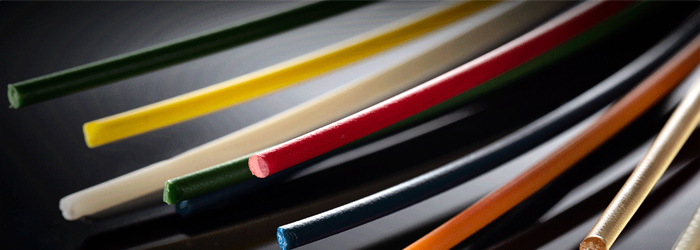
The F870 supports FDM Nylon 12CF, ASA, ABS-M30, and the new FDM ABS Draft. Nylon 12CF is carbon-fiber reinforced and suited for structural fixtures and tooling that require stiffness and durability. ASA and ABS-M30 cover general durable applications and color-coded tooling. ABS Draft is optimized for a lower cost per part than standard ABS where maximum strength isn't necessary.
How does the F870 differ from the F770?
Both share the same build envelope: 1,000 x 610 x 610 mm. The F870 adds Nylon 12CF capability, a fully heated chamber up to 95°C, new N-series print heads including a hardened head for composites, integrated material drying, automatic material changeover, and larger 4,100 cm3 spool compatibility. The F870 is more compelling when large size must be paired with composite strength, thermal control, and unattended production runs.
Can the F870 replace machining for automotive tooling?
The F870 can complement machining for low-volume, large, complex, ergonomic, or time-sensitive tooling applications. Whether it makes sense to replace a specific machined tool depends on the geometry, material requirements, accuracy needs, durability expectations, finishing requirements, and the cost and lead time of the conventional alternative.
What is FDM Nylon 12CF and why does it matter for automotive tooling?
FDM Nylon 12CF is a carbon-fiber-reinforced nylon that provides stiffness and strength beyond standard thermoplastics. For automotive tooling, it is relevant for structural fixtures, robot grippers, and manufacturing aids where a standard nylon or ABS part would flex under load. It is not automatically a replacement for high-load, high-temperature, or high-cycle machined metal tooling, but it expands the range of applications where a printed tool is viable.
What cars are built at Toyota Georgetown?
Toyota's Georgetown, Kentucky plant produces the Camry Hybrid, the all-new RAV4 Hybrid (production launched June 2026), and is preparing to produce the all-electric Highlander SUV in late 2026. It is Toyota's largest manufacturing plant in the world, with a capacity of 550,000 vehicles per year.
What vehicles does Rivian build in Plymouth, Michigan?
Rivian's Plymouth facility is an engineering and prototype manufacturing hub, not an assembly plant. The R1T electric pickup truck and R1S electric SUV are engineered and prototyped there. Full production of both vehicles takes place at Rivian's assembly plant in Normal, Illinois.
Is the F870 available now?
The F870 was announced on September 9, 2026. Toyota and Rivian have installed the system ahead of commercial availability. Contact CADimensions for current availability and lead time information.
Where can I see the F870 in person?
Stratasys is showcasing the F870 at IMTS 2026, Booth 338460, South Hall, Chicago, September 14–19, 2026.
Talk to a CADimensions specialist about the F870
The F870 is two days old and already on the floor at two of the most demanding automotive manufacturers in the country. If you are evaluating large-format FDM for tooling, fixtures, or manufacturing aids, this is the right time to have that conversation.