Bringing a new product to market takes time, skill, and the right tools. Traditional tooling methods can slow that process down. Long lead times, high costs, and limited flexibility make it difficult for teams to test ideas early or respond quickly to changes.
Rapid tooling offers a solution. Using 3D printing and digital workflows, engineers can create molds, patterns, and other tools much faster. This means teams can test designs sooner, fix problems early, and speed up the product development process.
CADimensions is a trusted partner for engineers and manufacturers. We help teams adopt rapid tooling to support their unique design and manufacturing needs. With the right tools and support, your team can move from concept to production with confidence. Because tomorrow is designed today.
What is rapid tooling?
Rapid tooling is the process of creating tools, such as molds, dies, and patterns, quickly. Instead of waiting weeks or months for traditional tooling, rapid tooling uses fast methods such as 3D printing to produce tools in days or even hours.
Key Benefits of Rapid Tooling
- Faster product development: Shorter wait times allow teams to test ideas sooner.
- Lower risk: Validate designs before investing in metal tooling.
- More flexibility: Easy to adjust or reprint tools as designs change.
Direct vs Indirect Rapid Tooling
- Direct rapid tooling creates the actual mold or tool using 3D printing or machining.
- Indirect rapid tooling creates a master pattern that is then used to cast or form the final tool.
.png?width=4815&height=3210&name=MicrosoftTeams-image%20(22).png)
Rapid Tooling vs Conventional Tooling
Traditional tooling is usually made from steel or aluminum. It is durable and great for high-volume production, but it comes with drawbacks: high cost, long lead times, and little room for early design changes.
Rapid tooling differs from conventional tooling primarily in speed, cost, and flexibility, making it ideal for early-stage production and design validation.
|
Factor |
Rapid Tooling |
Conventional Tooling |
|
Speed |
Hours to a few days |
Weeks to months |
|
Cost |
Low to moderate |
High upfront investment |
|
Best Use Cases |
Prototyping, small batches, design testing, bridge production |
High-volume manufacturing |
|
Flexibility |
Easy to modify |
Difficult to change once produced |
Rapid tooling gives teams more freedom to iterate, test, and improve before committing to large-scale tooling.
How the Rapid Tooling Process Works:
Rapid tooling easily fits into modern product development workflows. Details can vary by application, but the process typically follows 4 steps:
- Design:
The process begins when engineers design the tool using CAD software. Design changes can be quick, which helps teams test ideas early. - Tool Fabrication:
Next, the tool is created using 3D printing or machining. 3D printing methods are often used for speed and complex shapes. Machining may be used when larger tools or more durable materials are required. - Production Using the Tool:
Once the tool is produced, it is used in the manufacturing process. This can include injection molding, thermoforming, casting, and other forming methods. - Post-Processing and Evaluation:
After parts are produced, the fit, finish, and performance will all be reviewed. If changes are needed, the tool can be adjusted and reprinted quickly. This quick feedback loop reduces risk before full production.
Applications and Use Cases
Rapid tooling supports many manufacturing processes and industries. It is especially valuable when speed, flexibility, and low risk are priorities.
Injection Molding
Injection molding is one the most common uses for rapid tooling. Traditional injection molds can take weeks to produce and require a large upfront cost. With rapid tooling and using 3D printing technology, teams can create molds or mold inserts in days rather than weeks.
Rapid tooling for injection molding allows teams to:
- Test production-grade materials
- Validate part design and fit
- Produce short runs or bridge production parts
- Reduce risk before investing in metal tooling
Bridge Tooling
Bridge tooling fills the gap between prototyping and full-scale production.
With bridge tooling teams can:
- Continue development while permanent tools are being made
- Test manufacturing processes and settings
- Gather performance data early
Thermoforming
Rapid tooling is commonly used for thermoforming and vacuum forming. 3D printed molds allow manufacturers to shape heated plastic sheets into packaging, housings, and protective components.
This approach works well for:
- Custom packaging
- Product housings
- Short production runs and design testing
Printed molds offer fast turnaround and design freedom without the cost of traditional tooling.
Overmolding and Insert Molding
Rapid tooling can also support overmolding and insert molding processes. Printed molds make it easier to test designs that combine rigid parts with soft materials or embedded components.
This is useful for:
- Product testing and validation
- Ergonomic or soft-touch parts
- Low-volume production and beta builds
Compression Molding
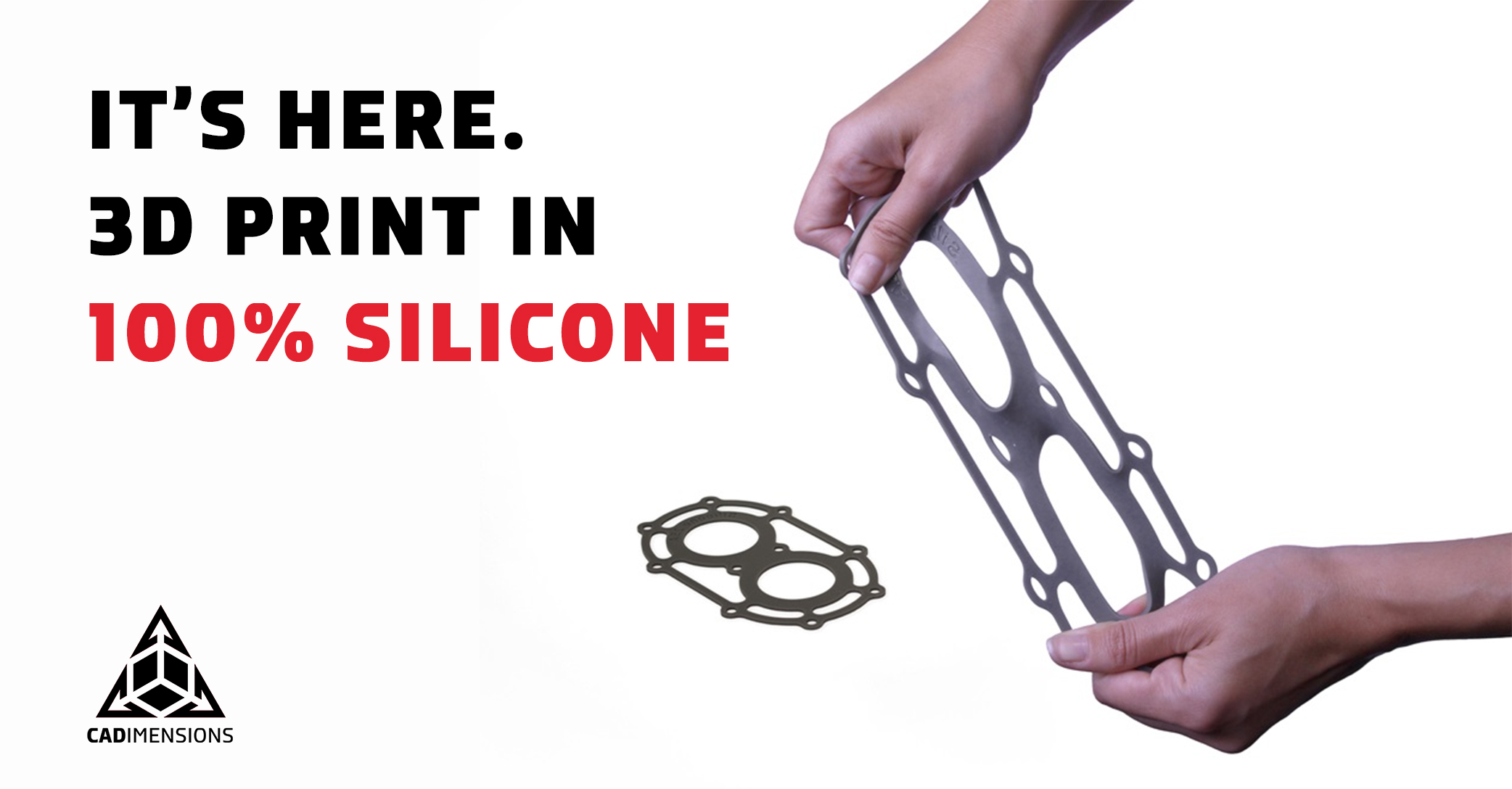
Compression molding is another area where rapid tooling adds value. 3D printed molds can be used to form rubber, silicone, or composite materials, especially for prototyping and short runs.
Rapid tooling allows teams to test mold designs quickly and make adjustments without high tooling costs.
Casting
Rapid tooling is often used to create molds or patterns for casting processes. This includes casting silicone, urethane, plastics, and even metals.
Casting with rapid tooling is common in:
- Medical devices
- Consumer products
- Custom or low-volume parts
Sheet Metal Forming
Rapid tooling can also support sheet metal forming. Printed dies can be used for low-volume forming and testing. Plastic tooling reduces surface marking and allows teams to validate designs before committing to metal dies.
What Materials are Used in Rapid Tooling?
Material selection plays a key role in rapid tooling performance. The right material depends on heat, pressure, and production volume.
Formlabs and Stratasys 3D printers support a wide range of rapid tooling applications. By choosing the right technology and material, teams can create tooling that meets specific needs for heat resistance, strength, speed, and durability.
Common 3D Printing Materials
- High-temperature resins for injection molding applications
- Rigid or glass-filled resins for strength and accuracy
- Tough resins for impact resistance
- Flexible materials for casting molds
What materials are suited for injection molding?
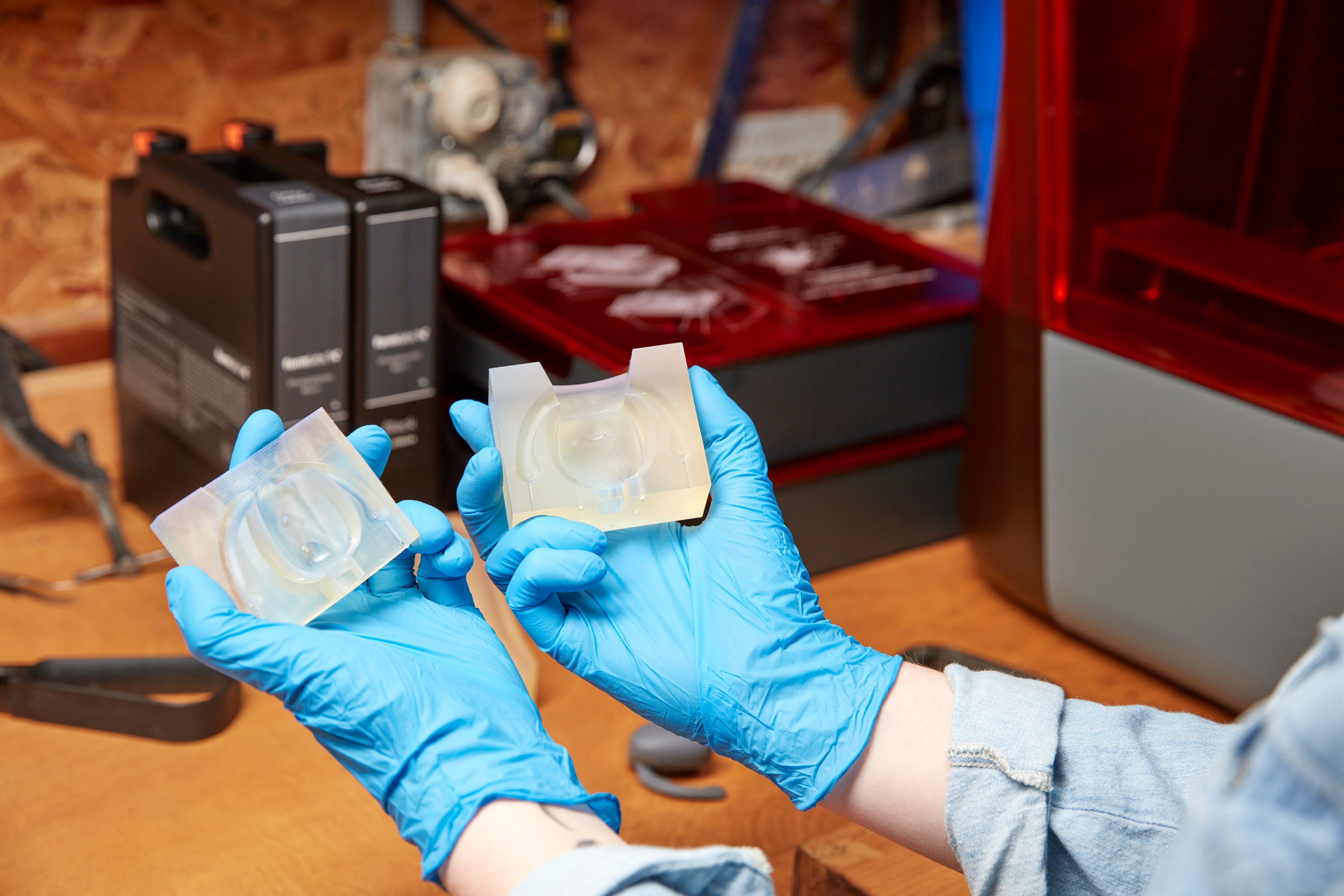
Injection molding places high demands on tooling, including heat resistance, strength, and dimensional stability. Both Formlabs and Stratasys offer solutions well-suited for rapid tooling in injection molding workflows.
Formlabs offers several materials designed for injection molding molds and inserts.
High Temp Resin is designed for tooling that must withstand high heat. It can handle temperatures up to 238 °C at 0.45 MPa, making it well-suited for injection mold inserts, molds, and tooling exposed to hot air, gas, or fluid flow. This material is commonly used for detailed and precise tooling where thermal stability is critical.
Rigid 10K Resin provides high stiffness and strength along with heat and chemical resistance. With temperature resistance up to 218 °C at 0.45 MPa, it is useful for injection molding applications that require rigid, dimensionally stable tools.
For more demanding injection molding applications, Stratasys P3™ DLP technology paired with Ultracur3D® RG 3280 material supports rapid tooling that can handle repeated molding cycles. This solution is designed for higher heat and pressure environments and is well suited for pilot production, bridge tooling, and process validation. It allows manufacturers to test real production conditions before investing in traditional steel or aluminum molds.
What materials are suited for thermoforming?
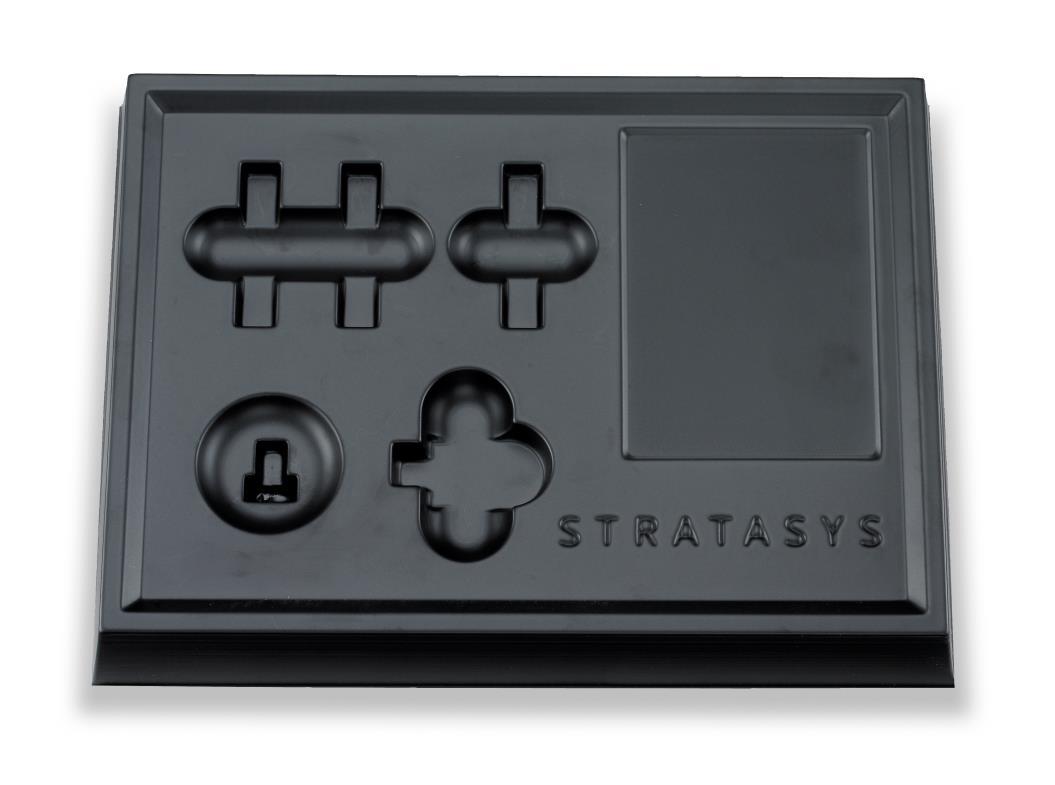
Thermoforming and vacuum forming require tooling that can be produced quickly while holding up to repeated use.
Fast Model Resin is Formlabs’ fastest printing resin, capable of vertical print speeds over 100 mm per hour. It is ideal for producing thermoforming molds quickly, allowing teams to test designs in hours instead of days.
Formlabs’ Tough 1500 Resin is also well-suited for thermoforming tools that experience repeated stress. It produces stiff yet pliable parts that bend and spring back without cracking, making it a strong choice for functional thermoforming molds, jigs, fixtures, and connectors that see repeated use or impact.
Stratasys FDM materials are often used for durable thermoforming tools, larger molds, and applications that require higher toughness or longer tool life.
FDM HIPS (High-Impact Polystyrene) offers mechanical properties similar to ABS, but with higher impact resistance. This makes it a good option for thermoforming tools that need added durability and resistance to cracking during repeated forming cycles.
ABS-M30 provides improved strength and surface finish compared to standard ABS, making it suitable for functional thermoforming tools that require reliable performance and more detailed features.
For applications that demand higher stiffness, ABS-CF10 combines ABS with 10% chopped carbon fiber, resulting in a material that is over 50% stiffer and 15% stronger than standard ABS. This added rigidity allows ABS-CF10 to replace metal tooling in some thermoforming, fixturing, and production environments.
What materials are best suited for casting?
Rapid tooling also plays a key role in casting workflows, where accuracy and design freedom are critical.
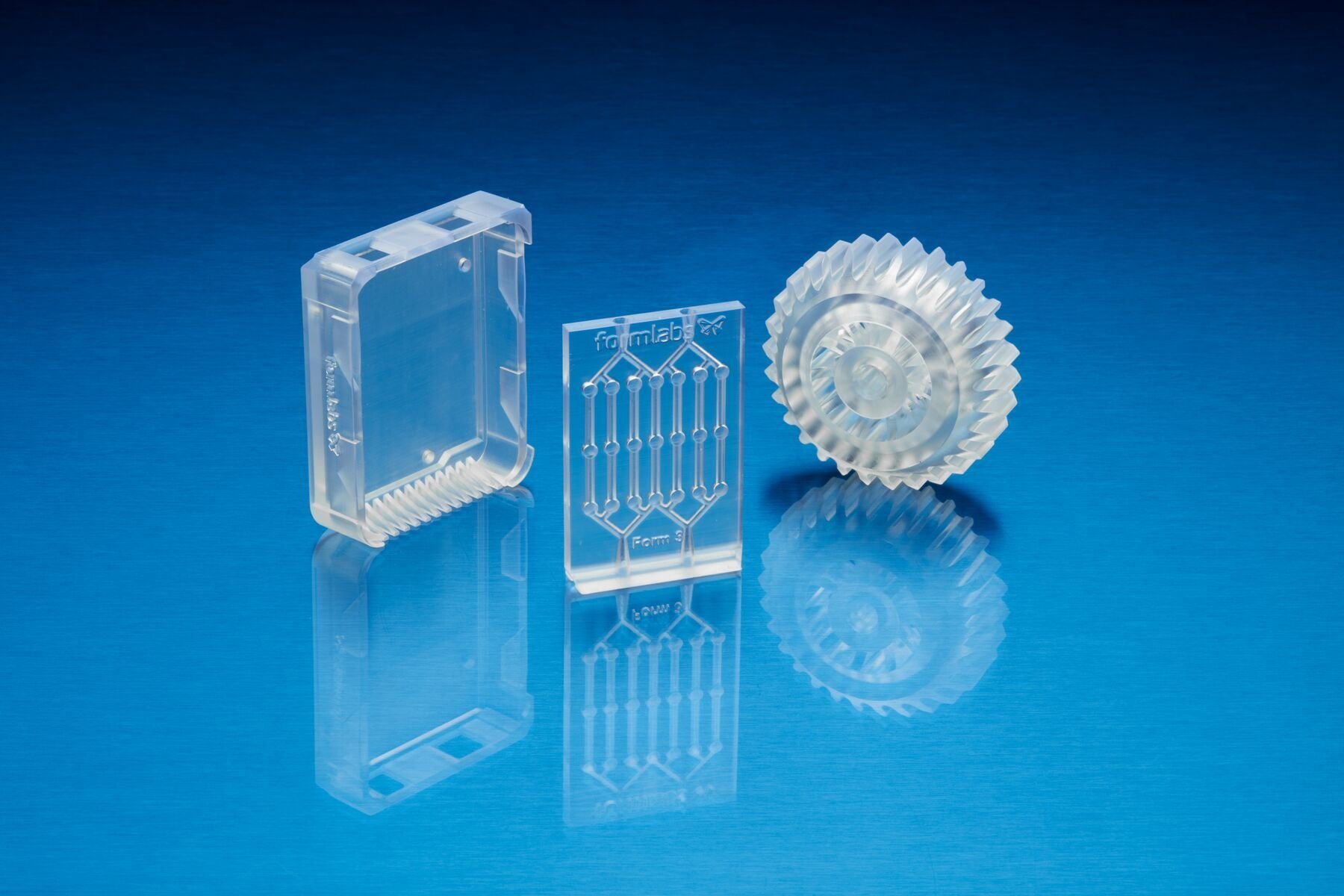
Formlabs’ Clear Cast Resin is designed for investment casting and is especially useful for parts with complex features such as undercuts, channels, and thin walls. It is well-suited for larger casting patterns and allows manufacturers to produce shapes that are difficult or impossible to create using traditional pattern-making methods.
Stratasys Neo® SLA systems, such as the Neo800, are frequently used in investment casting pattern production, particularly for aerospace, industrial, and medical applications. SLA-printed patterns are valued for their high accuracy, smooth surface finish, and large build envelope, which support complex and larger cast parts.
What materials are best suited for creating jigs and fixtures?
In addition to molds and forming tools, rapid tooling includes jigs, fixtures, and manufacturing aids that support production operations.
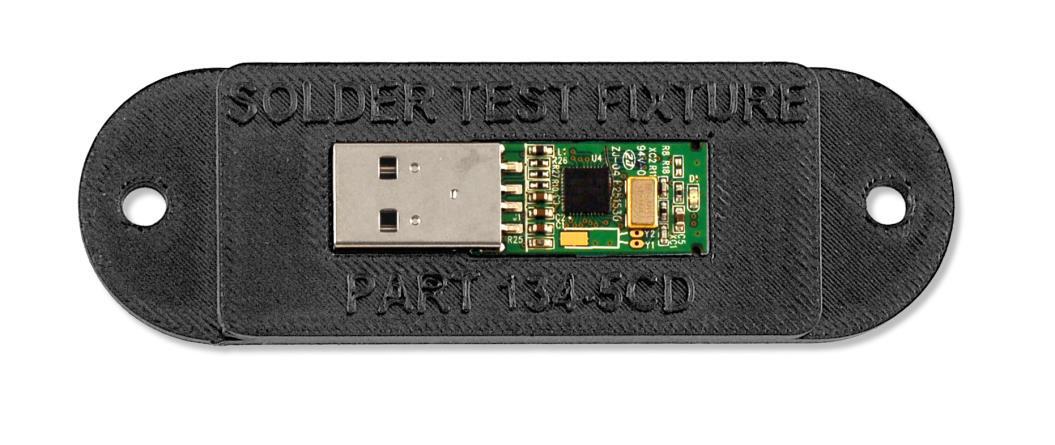
Formlabs’ Nylon 12 Powder, used with Formlabs SLS printers, is ideal for creating end-use jigs, fixtures, and manufacturing aids. This material offers high stiffness, durability, and impact resistance, and parts can be printed without support structures. This makes it well-suited for production environments where strength and reliability are required.
Stratasys FDM materials are commonly used for durable, production-ready jigs and fixtures, especially in industrial environments.
- ABS-ESD7 is designed for applications where static control is critical. Its static-dissipative properties help protect sensitive electronics and components, making it a strong choice for jigs and fixtures used in electronics manufacturing or flammable environments.
- ASA is well suited for jigs and fixtures used in outdoor or harsh environments. It offers excellent UV stability and durability, making it ideal for production tools exposed to sunlight, temperature changes, or long-term outdoor use.
Talk to a Rapid Tooling Expert
Get guidance on materials, printers, and workflows for your application.

Frequently Asked Questions About Rapid Tooling:
When should you use rapid tooling instead of traditional tooling?
Use rapid tooling when you need fast iteration, low upfront cost, or short production runs before committing to metal tooling.
Is rapid tooling suitable for production parts?
Yes, rapid tooling is often used for bridge production and low-volume runs, though it is not intended for long-term, high-volume manufacturing.
How long does rapid tooling take?
Depending on complexity, rapid tooling can be produced in hours to a few days using 3D printing or CNC machining.
Rapid tooling gives engineering and manufacturing teams a faster, more flexible way to bring products to life. By reducing lead times and lowering risk, it helps teams test designs earlier and make better decisions before full production.
At CADimensions, we help teams implement 3D printing for rapid tooling solutions that fit their workflows and goals. Whether you are developing prototypes, bridge tooling, or short-run production parts, our experts are here to help.
Ready to accelerate your product development process?
Let’s explore rapid tooling solutions that work for your team. Because tomorrow is designed today.