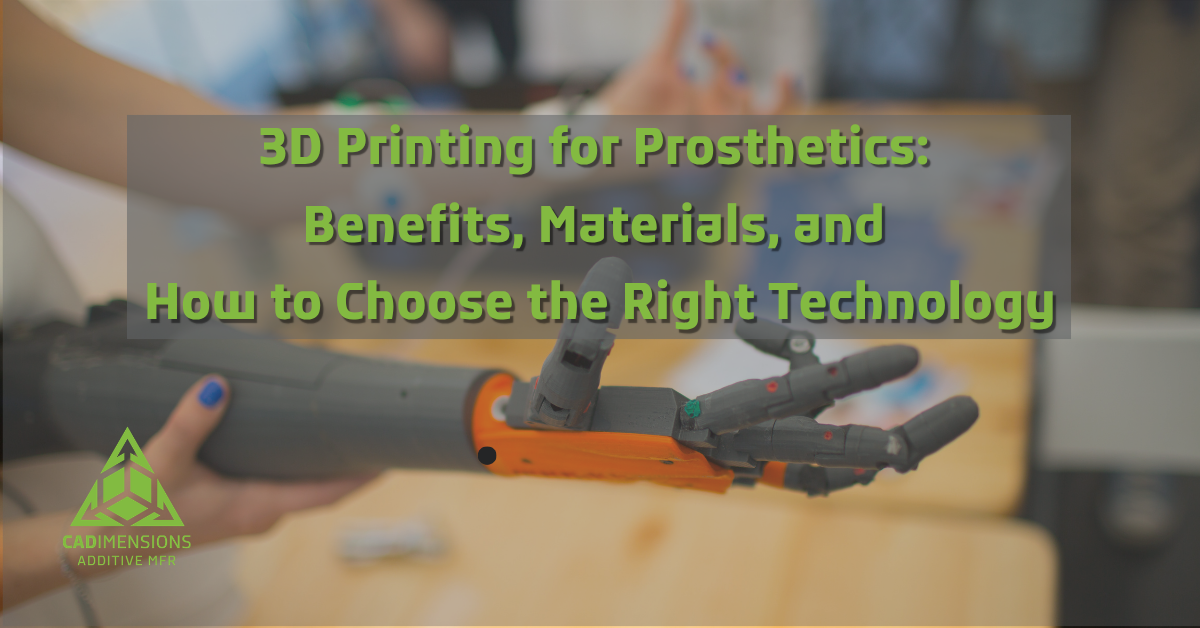
In this article, we'll show how 3D printing works for prosthetics, what materials and technologies to consider, and how to choose the right solution for your team.
In This Article
- What is 3D Printing for Prosthetics?
- How Does 3D Printing for Prosthetics Work?
- What are the Benefits of 3D Printing for Prosthetics?
- What are the Pros and Cons of 3D Printed Prosthetics?
- Comparing 3D Printers for Prosthetics Manufacturing
- What Materials are Commonly Used in 3D Printed Prosthetics?
- Case Studies of 3D Printing in Prosthetics
- Frequently Asked Questions
What is 3D Printing for Prosthetics?
3D printing for prosthetics is the use of additive manufacturing to create custom artificial limbs and orthopedic devices based on a patient's anatomy. It enables faster production, lower costs, and highly personalized designs compared to traditional manufacturing methods.
- Uses 3D scans or medical imaging for precision
- Enables patient-specific customization
- Reduces production time and tooling costs
- Supports rapid prototyping and iteration
How does 3D Printing for Prosthetics Work?
3D printing for prosthetics works by converting patient anatomy into a digital model, designing a custom device in CAD software, and producing it layer by layer using additive manufacturing.
1. Capture the Patient's Anatomy
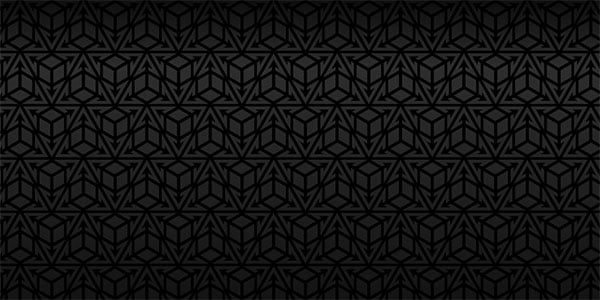
The process starts with a 3D scan or medical imaging, such as a CT scan. This creates an accurate digital model of the patient's anatomy.
2. Design the Prosthetic
Engineers use CAD software to design the prosthetic based on that scan. At this stage, teams can adjust fit, shape, and function to match the patient's needs.
3. Select the Right Material
The next step is choosing a material based on the application. Some materials are better for comfort and flexibility, while others are built for strength and durability.
4. Print the Part
The design is sent to a 3D printer, where the part is built layer by layer. This allows for complex shapes and custom features that are difficult to produce with traditional methods.
5. Post-Process and Fit
After printing, the part is cleaned, cured, or finished as needed. It is then fitted to the patient and adjusted if necessary.
What are the benefits of 3D printing for prosthetics?
3D printing improves prosthetic manufacturing by enabling customization, reducing production time, lowering costs, and increasing design flexibility.
Key Benefits
Customization at Scale
Each patient is different, and prosthetics need to reflect that. 3D printing makes it possible to design devices that match a patient's exact anatomy. This improves fit, comfort, and overall performance. Research shows that personalized prosthetics lead to better usability and patient satisfaction.
Faster Iteration Cycles
Speed matters, especially during designing and testing. With 3D printing, teams can quickly create and test multiple versions of a design. Instead of waiting weeks for new parts, updates can happen in days.
Reduced Tooling Costs
Traditional manufacturing often requires expensive molds and tooling, especially for custom prosthetic parts. 3D printing removes much of that upfront cost. Teams can produce parts directly or create tooling as needed, without committing to large production runs. This makes low-volume and patient-specific production much more cost-effective.
Supply Chain Resilience
Long lead times and supplier delays not only slow production but also delay patients in getting the care they need. With 3D printing, teams can bring manufacturing in-house and produce parts on demand. This reduces reliance on external vendors and shortens turnaround times. It also expands access to prosthetics in areas with limited manufacturing resources.
Design Freedom
Traditional methods can limit what you can build. 3D printing opens up new design possibilities. Engineers can create complex geometries, lightweight structures, and integrated features that are difficult to manufacture with conventional processes. This flexibility allows teams to improve both performance and comfort, while continuing to innovate in prosthetic design.
What are the pros and cons of 3D printed prosthetics?
3D printed prosthetics offer speed and customization, but material limitations can affect durability in high-stress applications.
Pros
- Speed: Move from design to part in days, not weeks
- Customization: Create patient-specific devices for a better fit and comfort
- Reduced Costs: Eliminate tooling for one-off or small-batch production
Cons
Durability Limitations: Fully 3D printed parts may not always meet the strength requirements of certain high-stress applications, depending on the material.
Many teams address this with a hybrid approach by using 3D printing for molds and prototyping, while selecting traditional manufacturing methods or materials for final, load-bearing components.
Comparing 3D Printers for Prosthetics Manufacturing
Choosing the right 3D printer depends on your goals, whether you're focused on rapid prototyping, patient-specific customization, or production-ready parts. Most prosthetics manufacturers don't rely on a single system. Instead, they combine technologies to support different stages of development and production.
Stratasys 3D Printers (FDM, PolyJet, SAF, P3 DLP)
Best for: Durability, multi-material capability (PolyJet printers), and production
Stratasys offers a range of technologies that support everything from prototyping to full-scale production.
FDM (Fused Deposition Modeling)
Best for: Strong, functional parts
Common systems: Fortus series, F123 series
Use cases:
- Load-bearing prosthetic components
- Manufacturing aids (jigs, fixtures)
- Functional prototypes
PolyJet (Multi-Material & High Detail)
Best for: Realistic models and patient-specific devices
Common systems: J5, J850 Digital Anatomy
Use cases:
- Patient-specific prosthetics and orthotics
- Multi-material prototypes
- Anatomical models for testing and training
SAF (Selective Absorption Fusion)
Best for: Production of end-use parts
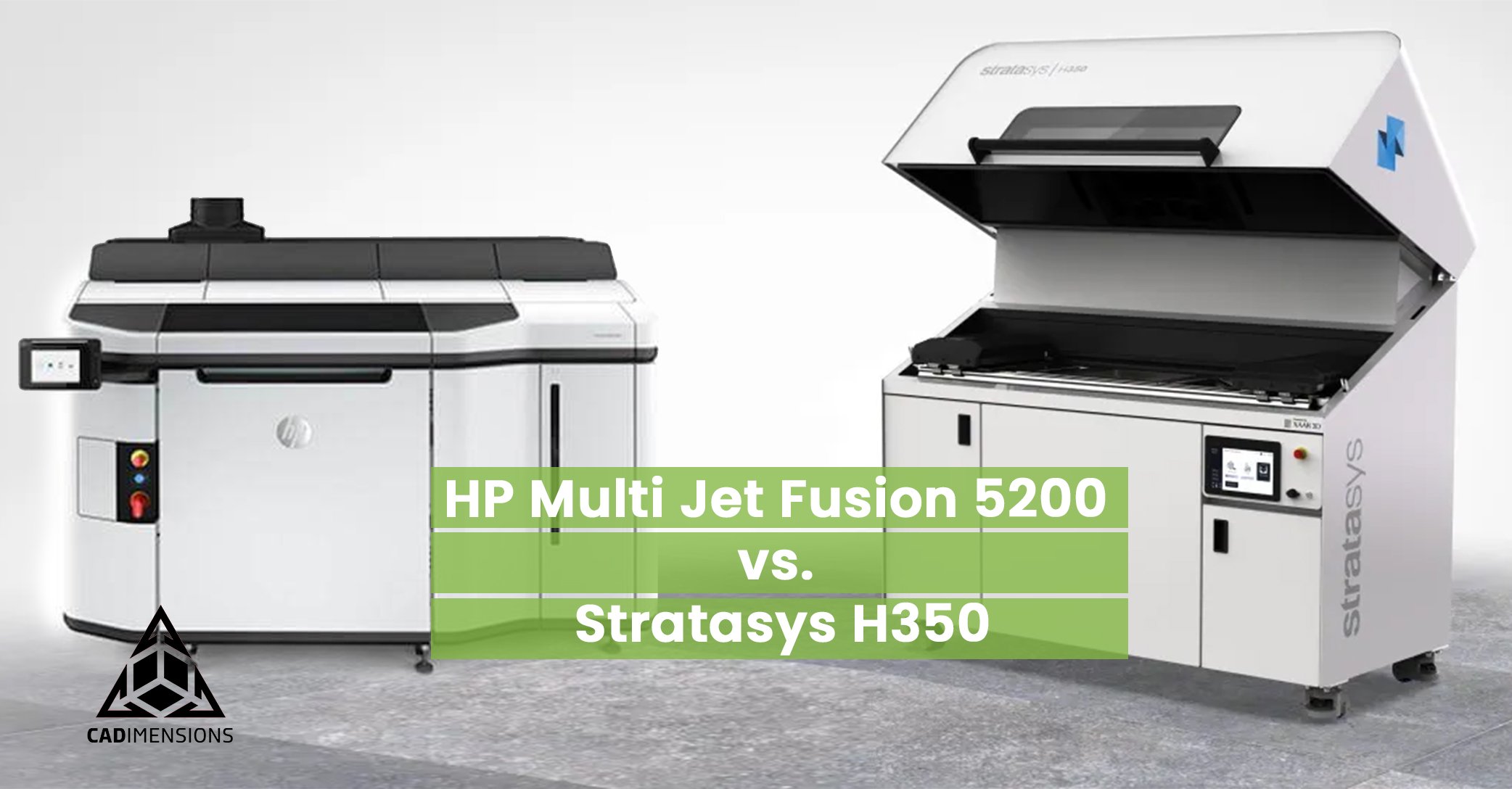
Common system: H350
Use cases:
- Orthotics and prosthetics production
- High-volume, repeatable parts
P3 DLP (Origin One)
Best for: High-performance materials and flexible production
Use cases:
- Biocompatible parts
- Flexible silicone components
- Low-to-mid volume manufacturing
Formlabs 3D Printers (SLA Technology)
Best for: Precision, customization, and fast iteration
Formlabs printers use stereolithography (SLA) (Form 2 and Form 3) and masked stereolithography (MSLA) (Form 4) to produce highly detailed parts with smooth surface finishes. These systems are commonly used in engineering teams and clinical environments.
Key Systems & Use Cases
Form 4B / Form 4BL
- Designed for medical applications
- Compatible with biocompatible resins
Use cases:
- Patient-specific prosthetics
- Surgical guides
- Anatomical models
Form 4 / Form 4L
Faster print speeds and higher throughput
Scales from prototyping to small-batch production
Use cases:
- Rapid prototyping
- Iterative design workflows
- Low-volume production
What Materials are Commonly Used in 3D Printed Prosthetics?
Material choice plays a key role in how a prosthetic performs. The right material depends on whether you need precision, strength, flexibility, or biocompatibility.
Photopolymers (High Detail & Precision)
Best for: Patient-specific parts, cosmetic components, and tooling
Photopolymers are liquid resins cured with UV light to create highly accurate parts with smooth surface finishes.
Common materials:
- Formlabs Tough 1500 Resin: Durable, impact-resistant (end-use components)
- Formlabs Rigid 10K Resin: Stiff and strong (molds and forms)
- Formlabs Clear Resin: High detail and transparency (cosmetic parts, housings, covers)
- Somos BioClear: Good combination of strength and toughness (anatomical models, functional prototypes, non-implantable medical applications)
Use cases:
- Prosthetic sockets and covers
- Molds for silicone components
- Surgical guides and models
Thermoplastics (Strength & Durability)
Best for: Load-bearing parts and production-ready components
Thermoplastics are known for their strength and long-term durability, making them ideal for functional prosthetics.
Common materials:
- Stratasys ULTEM™ 1010: High strength, heat-resistant, biocompatible
- Stratasys ABS-M30i: Tough, sterilizable (functional prototypes)
- Stratasys PA12 (SAF): Lightweight, strong, slightly flexible
- Stratasys PC-ISO: Biocompatible. High strength, impact resistance, durability, and heat resistance.
Use cases:
- Structural prosthetic components
- Orthotics and wearable devices
- Jigs and fixtures for production
Flexible Materials (Comfort & Fit)
Best for: Patient comfort, skin contact, and impact absorption
Flexible materials improve wearability, especially where movement, cushioning, or direct skin contact is involved.
Common materials:
- Stratasys MED412 (Origin/P3): Flexible, biocompatible
- Stratasys P3™ MED Silicone 25A: Soft, highly elastic, biocompatible silicone for patient-contact applications
- Stratasys P3™ Silicone 25A: Durable elastomer with strong tear resistance and long-term stability
Use cases:
- Prosthetic liners and cushioning components
- Skin-contact surfaces and wearable interfaces
- Soft-touch or shock-absorbing features
- Seals, gaskets, and flexible connectors
Biocompatible Materials (Patient-Safe Applications)
Best for: Devices that come into direct contact with skin or are used in clinical environments
Biocompatible materials are tested to meet safety standards for medical use. They are designed to be non-toxic and suitable for patient contact, depending on the application and duration of use.
Common materials:
- Formlabs BioMed Resins: Certified for medical applications (guides, patient-specific devices)
- Stratasys MED610 (PolyJet): Transparent, biocompatible for precise, patient-specific parts
- Stratasys ULTEM™ 1010 (FDM): High-strength, biocompatible thermoplastic
- Stratasys P3™ MED Silicone 25A: Soft, elastic, biocompatible silicone for comfortable skin contact
Use cases:
- Patient-contact prosthetic components
- Prosthetic liners and soft-touch interfaces
- Surgical guides and medical tools
- Wearable medical devices
Materials Comparison for Prosthetics Applications
|
Material Type |
Example Materials |
Strength |
Flexibility |
Biocompatibility |
Best Use Case |
|
Rigid Photopolymers (SLA) |
Formlabs Tough 1500, Rigid 10K |
Medium–High |
Low |
Some options |
High-detail parts, sockets, molds |
|
Thermoplastics (FDM / SAF) |
Stratasys ULTEM™ 1010, ABS-M30i, PA12 |
High–Very High |
Low–Medium |
Some options |
Structural components, load-bearing parts |
|
Flexible Polymers |
Stratasys MED412, PolyJet elastomers |
Medium |
Medium–High |
Some options |
Cushions, interfaces, soft-touch features |
|
Silicone (3D Printed) |
Stratasys P3™ MED Silicone 25A, P3™ Silicone 25A |
Medium |
Very High |
Yes (MED version) |
Liners, skin-contact parts, wearable comfort |
|
Biocompatible Materials (General) |
MED610, BioMed Resins, ULTEM 1010 |
Varies |
Varies |
Yes |
Patient-contact devices, surgical guides |
Case Studies of 3D Printing in Prosthetics
3D printing is already delivering real results across prosthetics, from product development to patient care and scalable production. Here's how organizations are putting it into practice:
Advanced Bionic Hand Development (Formlabs + PSYONIC)
PSYONIC used 3D printing to rapidly develop and refine a bionic hand, bringing prototyping in-house to iterate faster and reduce costs. This approach allowed their team to respond quickly to real patient feedback and accelerate innovation.
Read the full PSYONIC case study.
Patient-Specific Prosthetics in Clinical Settings (Tan Tock Seng Hospital)
Tan Tock Seng Hospital uses 3D printing to create patient-specific prosthetics and surgical tools directly from medical scans. By producing devices in-house, they've reduced turnaround times and improved fit and accuracy for patients.
Read the full Tan Tock Seng Hospital case study.
Custom Orthotic Helmets at Scale
Using a fully digital workflow, healthcare providers at North Bristol NHS Trust Hospital are producing customized orthotic helmets for infants with flat head syndrome. 3D printing enables a precise fit while maintaining efficient, repeatable production.
Read the full Bristol Helmet Service case study.
Frequently Asked Questions About 3D Printing Prosthetics
What are the benefits of 3D printing for prosthetic devices?
3D printing helps prosthetics manufacturers produce patient-specific devices faster, with less tooling cost and more design flexibility. It also makes it easier to iterate on fit, comfort, and function without restarting an entire production workflow.
What materials are commonly used in 3D printed prosthetics?
Common materials include photopolymers, thermoplastics, flexible polymers, and biocompatible resins or silicones. The best material depends on the application, such as structural strength, skin contact, flexibility, or cosmetic detail.
What is the difference between 3D printing for prosthetics and orthotics?
Prosthetics are designed to replace missing body parts, while orthotics are designed to support, align, or correct existing limbs or joints. Both can benefit from 3D printing, especially when customization, repeatability, and patient comfort are priorities.
Can 3D printing be used for end-use production of prosthetics?
Yes, but it depends on the technology, material, and performance requirements of the application. Many manufacturers use 3D printing for both prototyping and end-use parts, while some load-bearing components may still require a hybrid manufacturing approach.
Are 3D printed prosthetics biocompatible?
Some materials are biocompatible and suitable for patient-contact applications, but not all 3D printing materials are. Manufacturers should verify material certification, intended use, and regulatory requirements before selecting a solution.
Which 3D printing technology is best for prosthetics manufacturing?
There is no single best technology for every use case. FDM is often chosen for strong functional parts, SLA for detailed patient-specific components, PolyJet for high-detail and multi-material applications, SAF for production parts, and P3/DLP for flexible or biocompatible materials.
Designing Better Prosthetics Starts Today
3D printing is changing how prosthetics are designed, developed, and delivered. It gives your team the ability to move faster, reduce costs, and create devices tailored to each patient. From rapid prototyping to production-ready parts, additive manufacturing helps you solve real challenges without sacrificing quality or performance.
Choosing the right technology is only part of the equation. Success comes from building the right workflow from design to production.
At CADimensions, we work alongside your team to help you:
- Evaluate the right 3D printing technologies for your application
- Select materials that meet performance and compliance needs
- Build scalable workflows that support long-term growth
Whether you're exploring additive manufacturing or optimizing an existing process, we're here to help you move forward with confidence.
Because tomorrow is designed today.
.png)