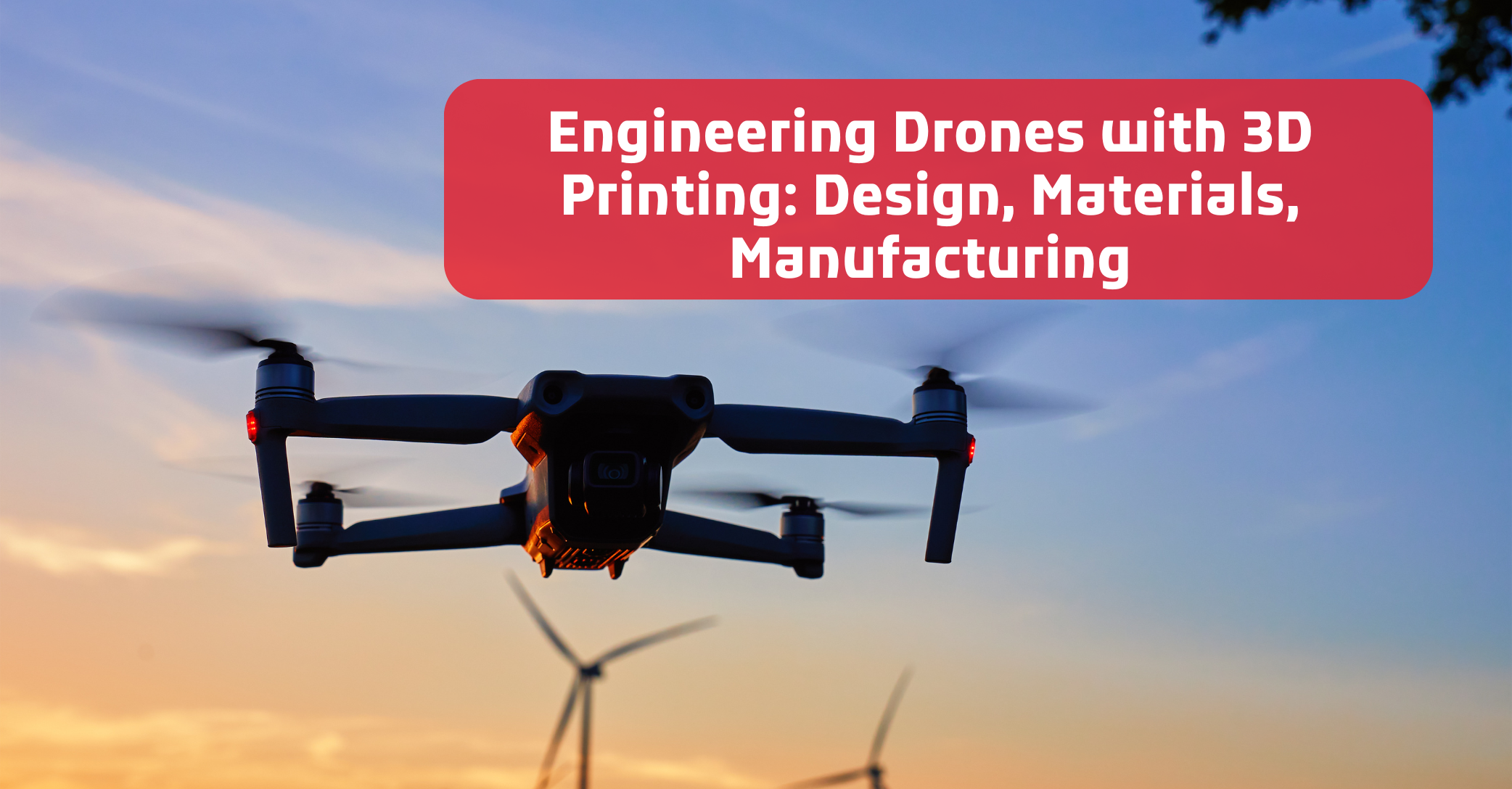
Engineers design and manufacture drones with 3D printing by combining CAD-driven design, advanced materials, and additive manufacturing workflows to create lightweight, customizable, and production-ready UAV (Unmanned Aerial Vehicle) components.
Integrating 3D Printing Into Modern Drone Engineering
3D printing enables engineers to design and manufacture drones with greater geometric freedom, faster iteration cycles, and tighter control over customization than traditional manufacturing methods.
Instead of designing around tooling constraints, teams can focus on:
- Aerodynamic performance
- Weight reduction
- Internal component layout
- Mission-specific requirements
Traditional drone manufacturing often restricted geometry and slowed design changes. With additive manufacturing, engineers can:
- Iterate UAV designs quickly without retooling
- Test aerodynamic improvements early
- Adjust internal structures as requirements evolve
This shift accelerates development timelines while expanding what’s possible in drone form and function.
Streamlining Design Prototyping With 3D Printing
3D printing significantly reduces the time required to prototype drones by allowing engineers to move directly from CAD models from platforms like, but not limited to, SOLIDWORKS Design and 3DEXPERIENCE to functional parts without tooling delays.
Key advantages include:
- Physical design updates produced in hours instead of weeks
- Early validation of fit, form, and assembly
- Parallel testing of multiple design variants
This rapid feedback loop reduces development risk and shortens time to market. Because all teams work from the same digital models, collaboration between design, engineering, and manufacturing improves.
Material Selection And Structural Optimization For Airborne Performance
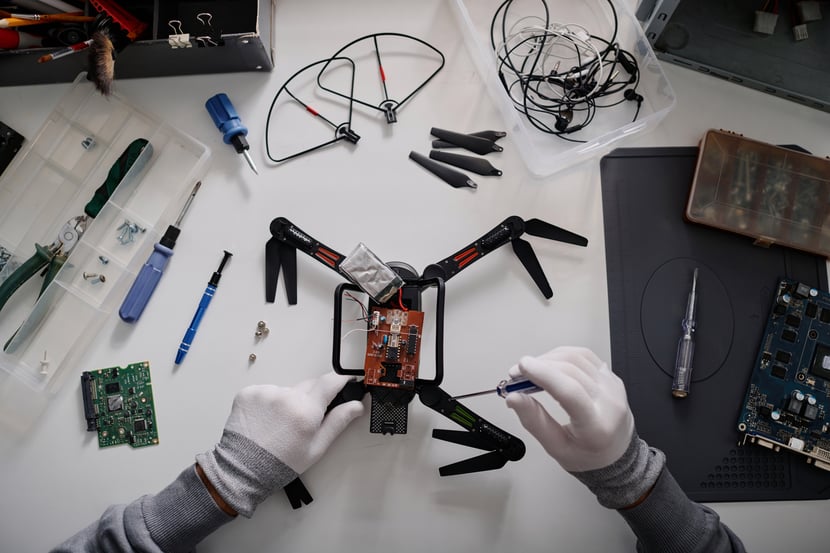
Material selection plays a critical role in the performance, durability, and service life of 3D printed drones. Engineers evaluate materials based on:
- Strength-to-weight ratio
- Environmental exposure
- Structural and flight-load demands
Common materials include:
- Nylon 12 GF and Nylon-CF10– High rigidity, impact resistance, and thermal stability for structural components
- ABS-like resins – Smooth surface finish and dimensional accuracy
- TPU 90A – Flexibility and vibration damping for mounts, guards, and isolation features
Material choice is closely tied to the printing process:
- Selective Laser Sintering (SLS) for strong, production-ready parts
- Stereolithography (SLA) for high-detail components
- Fused Deposition Modeling (FDM) for cost-effective prototypes
Engineers use simulation tools such as topology optimization and finite element analysis (FEA) to:
- Reduce unnecessary mass
- Maintain structural integrity
- Optimize airflow and load paths
The result is a lightweight drone airframe designed to perform reliably under real-world operating conditions.
Ensuring Precision, Safety, And Compliance In Drone Manufacturing
For 3D printing drones used in industrial or regulated environments, precision and quality assurance are essential.
Engineering teams embed quality throughout the workflow using:
- Certified and traceable materials
- Dimensional inspection and mechanical testing
- Process validation aligned with ASTM and ISO standards
Additional validation includes:
- Vibration testing
- Impact testing
- Thermal cycling and environmental exposure
These rigorous QA practices ensure printed drone components meet safety, reliability, and regulatory requirements. The result? Confident deployment in mission-critical applications.
Real-World Applications: Case Studies In 3D Printed Drone Solutions
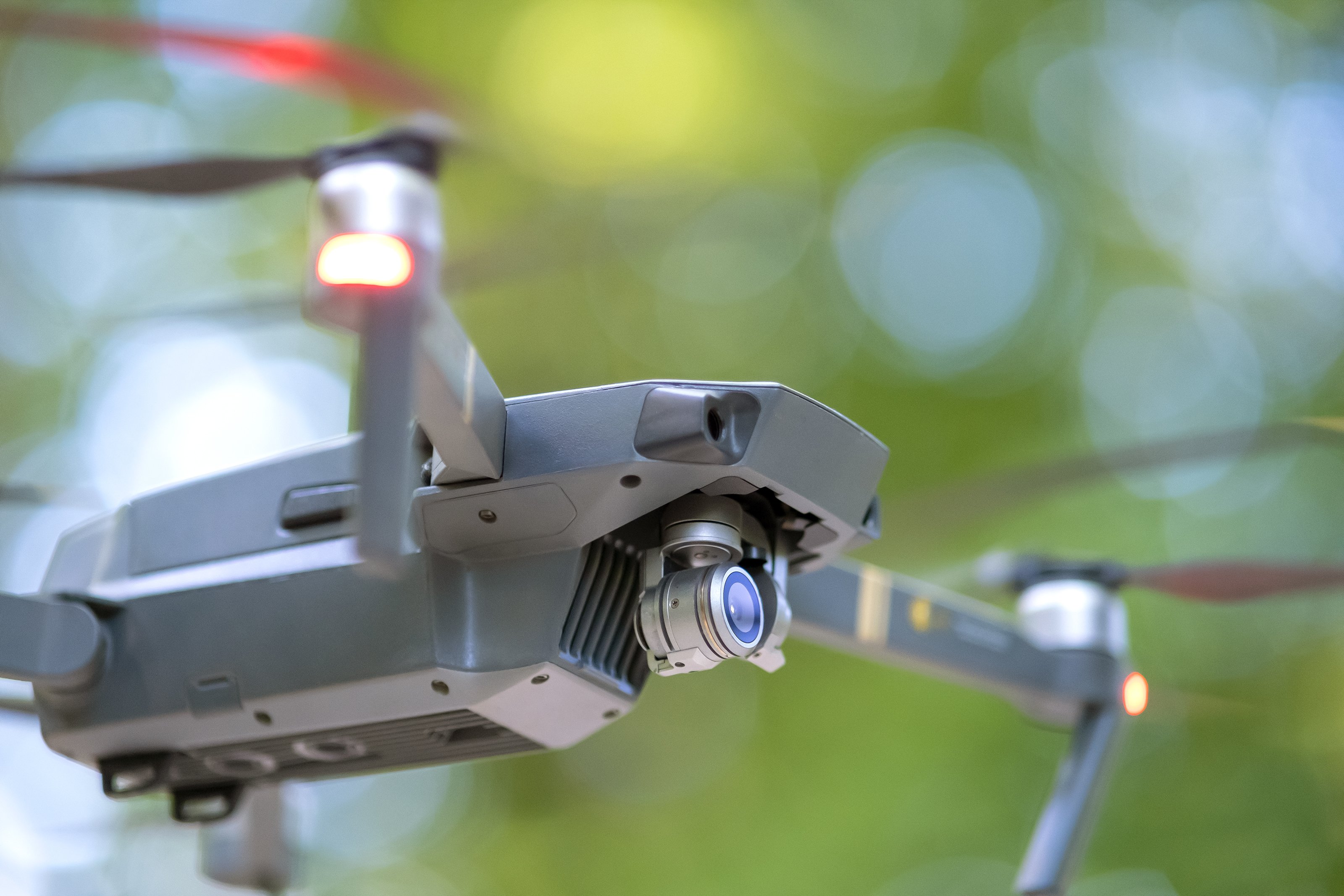
Real-world deployments highlight how 3D printing drones enable faster development, modular designs, and mission-specific customization, especially when teams control the full digital workflow in-house.
Common advantages include:
- Rapid prototyping and field testing
- Modular frames and interchangeable payload mounts
- Faster repairs and reduced downtime
Companies such as ION Mobility, ORQA FPV, and Teranova use additive manufacturing to refine drone components quickly, supporting specialized missions while lowering development overhead and increasing operational agility.
Frequently Asked Questions About 3D Printed Drones
Can entire drones be manufactured using 3D printing?
Yes. Engineers can manufacture most structural components of a drone using 3D printing, including frames, arms, enclosures, and mounts. Critical components such as motors, batteries, flight controllers, and sensors are typically sourced separately and integrated during assembly. This hybrid approach combines the flexibility of additive manufacturing with proven electronic systems.
What 3D printing materials are best for drone frames?
High-performance polymers such as Nylon 12 GF, produced via Selective Laser Sintering (SLS), are commonly used for drone frames due to their excellent strength-to-weight ratio, impact resistance, and thermal stability.
For vibration damping or flexible parts, materials such as TPU 90A are preferred.
Final material selection depends on expected flight loads, operating environment, and mission duration.
Are 3D printed drones suitable for regulated or industrial environments?
Yes. When manufactured using certified materials and controlled processes, 3D printed drone components can meet industrial and regulatory requirements. Engineers rely on dimensional inspection, mechanical testing, and environmental validation to ensure compliance with applicable ASTM and ISO additive manufacturing standards.
How does 3D printing reduce drone development time?
3D printing removes tooling lead times and enables rapid iteration directly from CAD models. This shortens development cycles and allows faster adaptation to changing operational requirements or mission needs. For example, ION mobility increased turnaround speed by 70%.
What are the main limitations of 3D printed drone parts?
Key limitations include:
- Build volume constraints
- Anisotropic material properties in some processes
- Higher per-part costs at large production volumes
Engineers address these challenges through design optimization, careful material selection, and hybrid manufacturing strategies that combine additive and traditional production methods.
Partnering for the Future of 3D Printing Drones
As drone technology continues to evolve, 3D printing drones has become a critical advantage for engineering teams looking to move faster, design smarter, and deliver mission-ready performance. From rapid prototyping and lightweight structures to material optimization and regulatory compliance, 3D printing empowers organizations to rethink how drones are designed, built, and deployed.
Success, however, depends on more than just having the right tools. It requires the right strategy, the right workflows, and a partner who understands both engineering challenges and real-world manufacturing demands.
At CADimensions, we work alongside design and manufacturing teams to help turn additive manufacturing potential into measurable results. Whether you’re evaluating materials, optimizing CAD workflows, validating production processes, or scaling 3D printing from prototype to production, our experts help you navigate every step with confidence.
Tomorrow’s drone innovations are being designed today. With the right partner, you’re ready to lead what’s next.
Print Your Designs With The Latest Durable Lightweight Technology