Choosing the right SLS 3D printing system
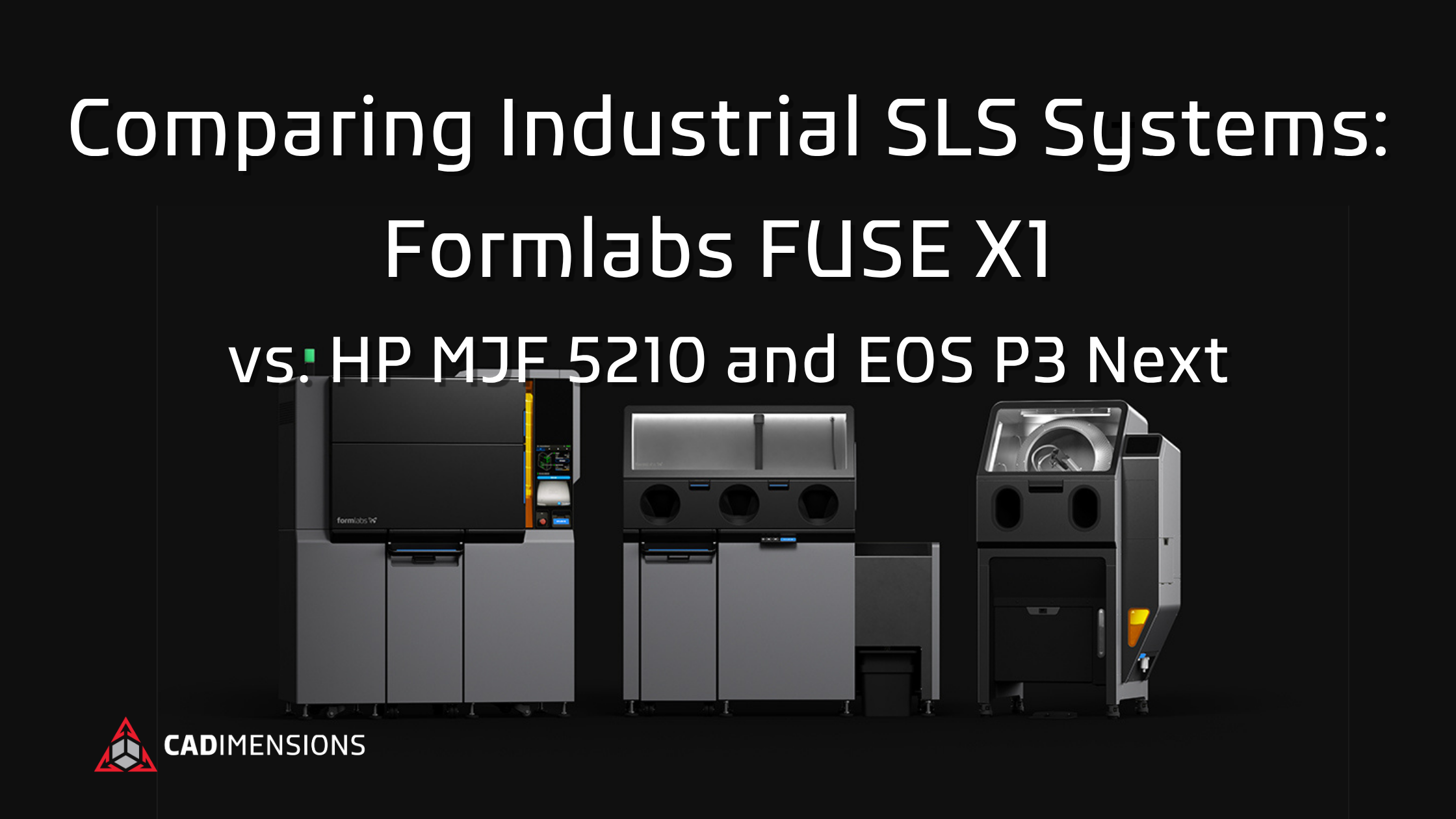
Bringing industrial SLS 3D printing in-house opens the door to faster prototyping, stronger production workflows, and more control over cost per part. When choosing the right SLS 3D printing ecosystem, there are many factors to consider. The Formlabs Fuse X1, HP MJF 5210, and EOS P3 Next each offer industrial powder printing capabilities, but they differ in total cost of ownership, facility needs, workflow complexity, packing density, surface finish, materials, and production scalability. This article offers a clear, practical comparison on how the Formlabs FUSE X1 compares to other industrial 3D printers on the market.
.png)
Quick Comparison: FUSE X1 vs HP MJF 5210 and EOS P3 Next
Before investing in an industrial powder 3D printing system, it’s important to compare more than the printer itself. The full ecosystem, including service costs, facility requirements, consumables, workflow, and packing density, can have a major impact on long-term cost per part and production efficiency.
|
|
Formlabs FUSE X1 |
HP MJF 5210 |
EOS P3 Next |
|
Technology |
SLS |
MJF |
SLS |
|
Estimated Starting Total Ecosystem Cost |
Under $200,000 |
$500,000+ |
$400,000+ |
|
Build Volume |
330 × 330 × 565 mm |
380 × 284 × 390 mm |
340 × 340 × 600 mm |
|
Build Volume Capacity |
61.5L |
41L |
69L |
|
Annual Service Plan Costs |
About $50,000/year |
About $35,000/year |
|
|
Powder Cost |
$45-$65/kg |
$44-61/kg |
$70–$80/kg |
|
Agents & Printheads |
None* (Note: some materials require nitrogen) |
$20–$30/kg |
None |
|
PA12 Refresh Rate |
30% |
20% |
50% |
|
Max Packing Density |
30%+ volume / 48%+ mass |
8–10% volume / 20% mass |
20% volume / 35% mass |
|
Printer Footprint |
12.5 sq. ft. |
30.1 sq. ft. |
29.1 sq. ft. |
|
Power Requirements |
Single-phase power, 200–240V, 50A |
Industrial 3-phase power |
Industrial 3-phase power |
|
Installation Considerations |
Fits through a standard U.S. single door; installs in about 1 hour |
Larger facility requirements and infrastructure planning |
Larger facility requirements and infrastructure planning |
|
Workflow Complexity |
Intuitive workflow with fewer touchpoints |
More complex workflow with agents, printheads, and added post-processing |
More complex industrial SLS workflow |
|
Best Fit |
Teams looking for lower total cost of ownership, simpler adoption, and production-ready SLS |
Teams already invested in MJF or needing specific HP materials |
Teams needing a larger SLS build volume or specific EOS materials |
Total Cost of Ownership: Why the Full Ecosystem Matters
When comparing industrial powder 3D printing systems, the purchase price is only part of the total cost to consider. The full cost of ownership includes everything your team needs to keep production moving: hardware, service plans, materials, software, consumables, labor, training, maintenance, and facility updates.
That is where the differences between the Formlabs Fuse X1, HP MJF 5210, and EOS P3 Next become clear. When comparing both initial investment cost and the annual total cost of ownership, the Formlabs FUSE X1 offers a lower price point than both HP MJF 5210 and the EOS P3 Next with regard to ecosystem cost, service plans, software needs, consumables, and ongoing operating expenses.
Facility Requirements: How Quickly Can You Start Printing?
Facility readiness can have a major impact on how quickly your team can bring SLS 3D printing in-house. A system that requires more space, power, ventilation, or facility updates can add time, cost, and complexity before the first part is ever printed. For teams looking to move quickly, installation requirements should be part of the buying decision from the start.
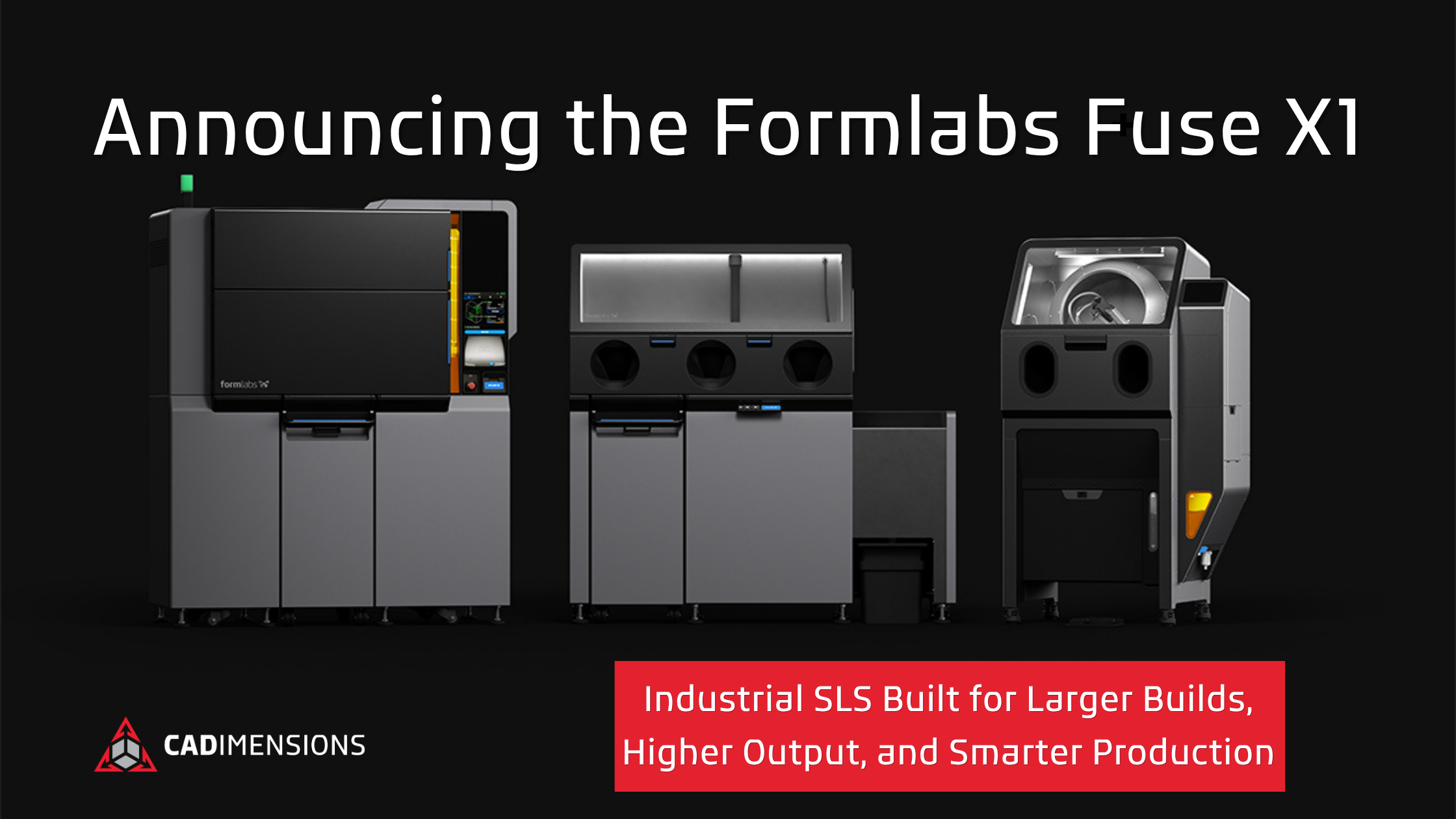
The Formlabs Fuse X1 is designed for a faster, simpler setup. It fits through a standard U.S. single door, installs in about one hour, and runs on single-phase power. It also has a smaller footprint than both the HP MJF 5210 and EOS P3 Next, helping teams add industrial powder printing capability without taking over valuable floor space.
Workflow, Labor, and Training Requirements
A production 3D printing system needs to fit the way your team works. If the workflow has too many steps, requires specialized training, or depends on added consumables, it can slow adoption and increase labor costs over time. For manufacturing teams already managing tight timelines and limited resources, ease of use matters.
The Formlabs Fuse X1 is built around a simpler, more intuitive workflow with fewer touchpoints. Unlike HP MJF 5210, it avoids the added complexity of third-party software and secondary dyeing steps. Compared to larger industrial systems like HP MJF 5210 and EOS P3 Next, Fuse X1 helps reduce training time, streamline build changeovers, and make powder printing easier to manage day-to-day.
Packing Density and Production Efficiency
Packing density plays a major role in production efficiency. The more parts your team can fit into a single build, the fewer changeovers you need to manage. The Fuse X1 supports 30%+ packing density by volume and 48%+ by mass, compared to 8–10% by volume and 20% by mass for HP MJF 5210, and 20% by volume and 35% by mass for EOS P3 Next.
Surface Finish and End-Use Part Quality
Surface finish matters when parts move beyond prototypes and into functional, customer-facing, or end-use applications. The Formlabs Fuse X1 is positioned to produce polished, consumer-ready parts without the same level of dyeing or manual post-processing often needed with HP MJF 5210 workflows.
Part quality also depends on consistency across the full build. With the Fuse X1’s higher packing density of 30%+ by volume and 48%+ by mass, teams can produce more parts per build while maintaining end-use quality. Compared to HP MJF 5210, which is listed at 8–10% by volume and 20% by mass, and EOS P3 Next, listed at 20% by volume and 35% by mass, Fuse X1 gives teams a strong balance of part quality, surface finish, and production efficiency.
Find the Right Fit for Your Production Goals
The Formlabs Fuse X1, HP MJF 5210, and EOS P3 Next are all built for industrial powder 3D printing, but they differ substantially in cost, workflow, and facility requirements. For teams looking to bring SLS production in-house with a lower total cost of ownership, simpler operation, and less infrastructure planning, the Fuse X1 offers a practical path forward.
Ready to see how the Fuse X1 could fit into your workflow? Explore the Formlabs FUSE X1 in more detail or connect with a CADimensions additive manufacturing expert to compare the best machine fits for your applications, cost per part, and production goals.
.png)