CADimensions has partnered with Formlabs, a global leader in professional desktop 3D printing, to bring their full lineup of SLA and SLS printers to our customers in engineering and manufacturing.
This is a natural fit. CADimensions has always focused on connecting teams with the right tools and the support to use them well. Formlabs builds professional-grade printing technology that's accessible enough for the desktop and capable enough for production. Together, we can offer our customers a more complete path from concept to finished part.
Here's a look at what's now available through CADimensions.
Formlabs MSLA printers: Form 4, Form 4B, Form 4L, and Form 4BL
All four of these printers use masked stereolithography (MSLA) technology. If you're new to MSLA, it works by using a masked light source to cure liquid resin layer by layer, producing parts with high accuracy and smooth surface finishes.
The Form 4 is where most people start. It has a build volume of 7.9" x 4.9" x 8.3" (20.0 x 12.5 x 21.0 cm) and can reach print speeds of up to 3.9" per hour (100mm/hr), pending part geometry and material. Tolerances are held up to +/- 0.15%. It also features a resin mixing wand that evenly distributes material across the tray and detects debris before it becomes a problem. It's a compact machine with a wide range of compatible materials, making it genuinely versatile across industries.
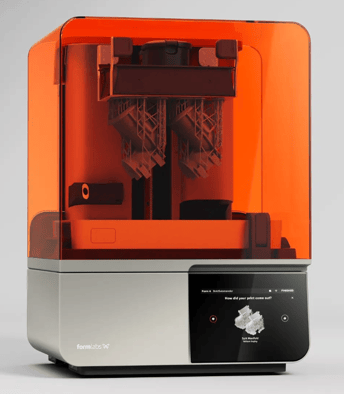
Formlabs Form 4 3D Printer
The Form 4B is built on the same platform as the Form 4, with one key difference: it's designed for medical and dental applications. It adds biocompatible materials that aren't available on the standard Form 4, including BioMed Flex 80A, Permanent Crown, and Surgical Guide resins. If your work touches healthcare or dentistry, this is the machine to look at.
Need more room to work? The Form 4L and Form 4BL answer that question. They use the same reliable MSLA technology and the same material library as the Form 4 and Form 4B, but with a build volume of 13.9" x 7.7" x 14" (35.3 x 19.5 x 35.5 cm). That's approximately 4.5 times larger. The same distinction applies here: the Form 4L is the general-purpose large-format option, and the Form 4BL adds biocompatible materials for medical and dental use.
Formlabs SLS printers: the Fuse series
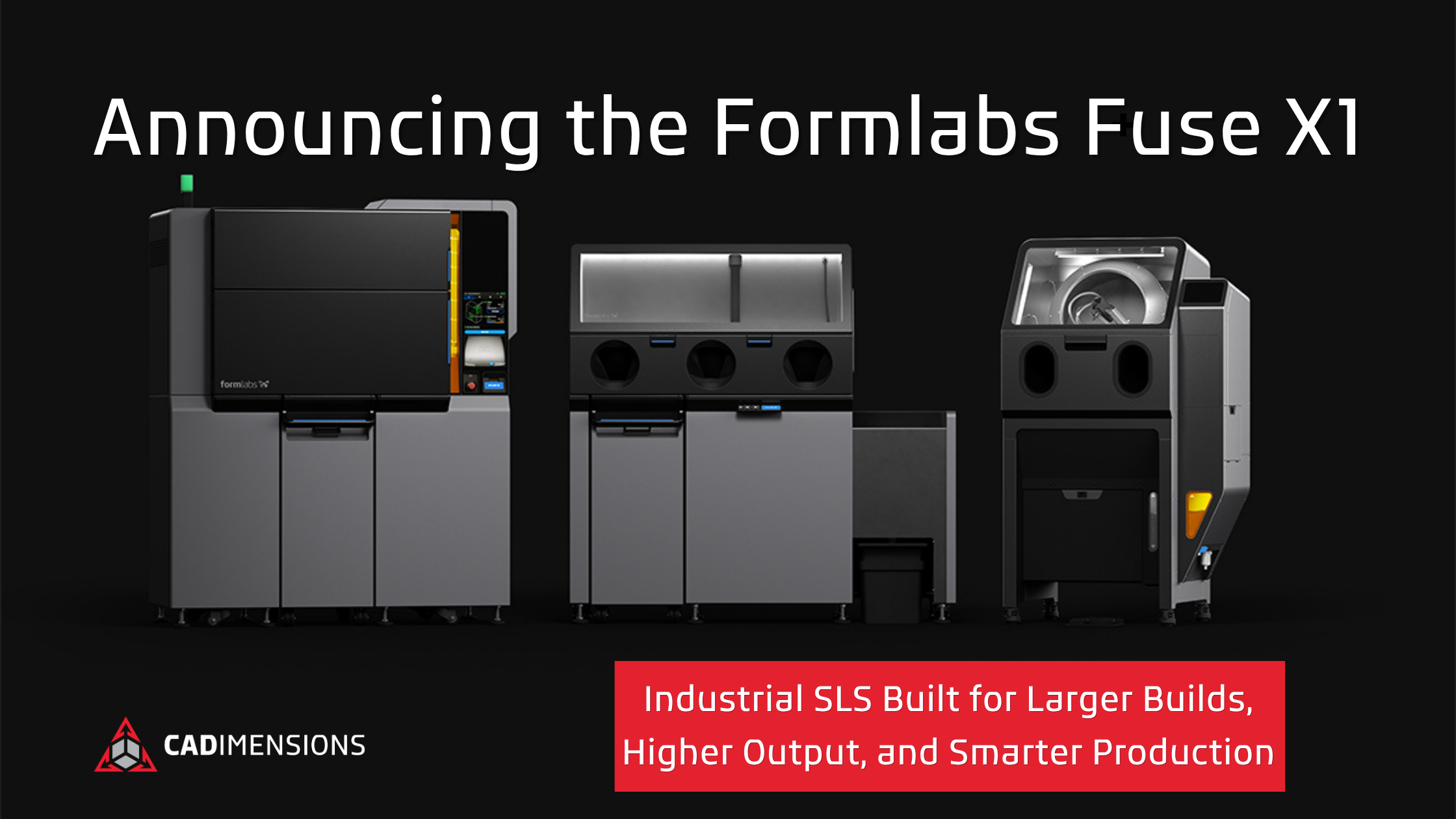
Selective laser sintering works differently from resin printing. Instead of curing liquid resin, SLS uses a laser to fuse powdered material layer by layer. One practical advantage: the excess powder supports the part during printing, so there are no support structures to remove after the fact.
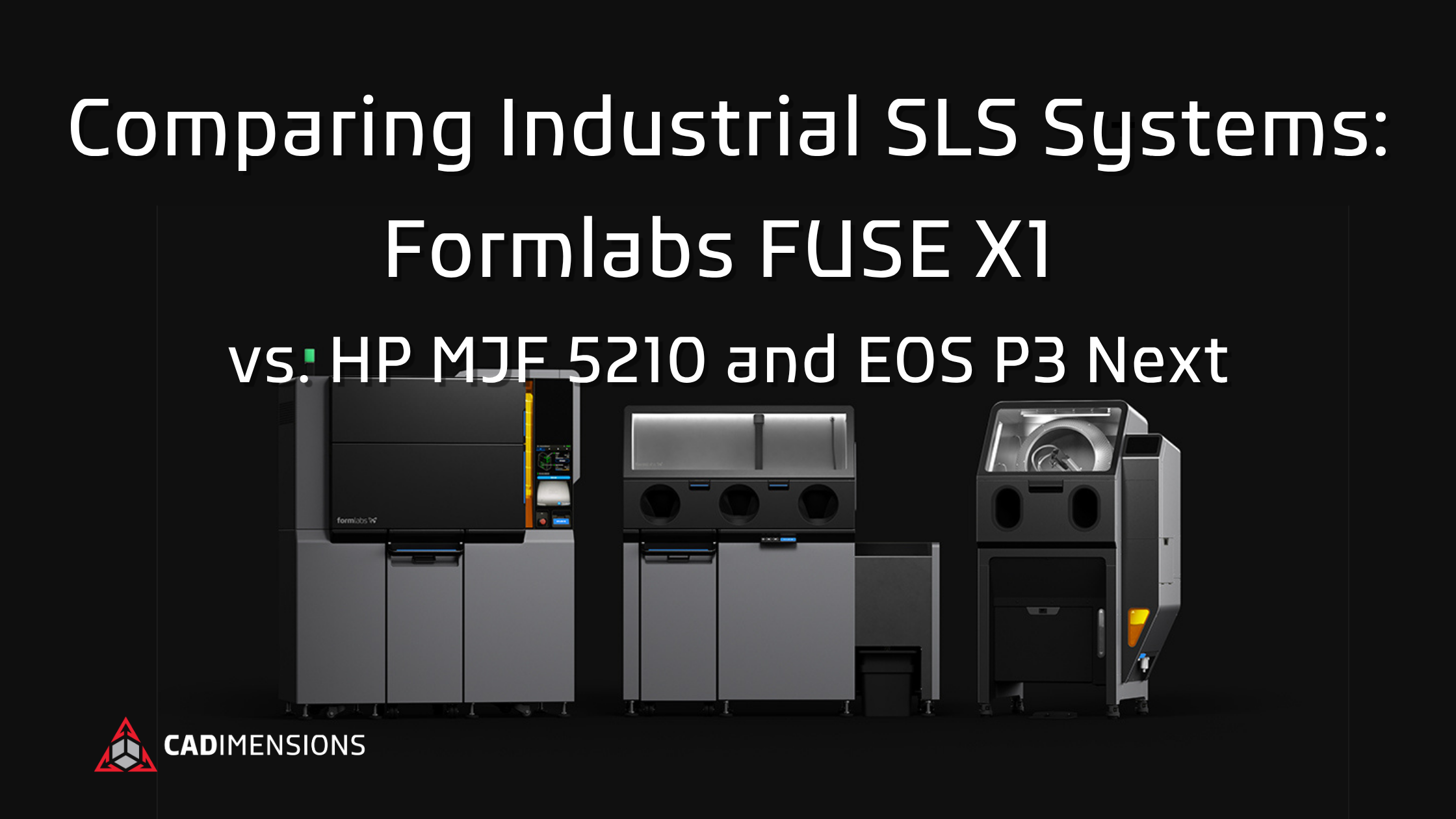
The Form Fuse 1 and its second iteration, the Form Fuse 1+ 30W, are built for throughput. The Fuse series is designed to be cost-effective at scale, making it a strong option for small to mid-size production runs, not just one-off prototypes.
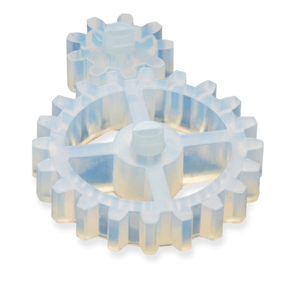
A gear assembly printed out of the Formlabs Durable Resin on the Form 4 printer.
The Fuse series supports three primary material families: Nylon 11, Nylon 12, and TPU. Each has composite options as well. Nylon 11 CF is carbon fiber-filled for added stiffness, and Nylon 12 GF is glass-filled for improved rigidity and surface quality. The TPU option comes in at a shore hardness of 90A, which puts it in the firm-but-flexible range useful for seals, gaskets, and impact-absorbing parts. The build volume is 6.5" x 6.5" x 11.8" (16.5 x 16.5 x 29.9 cm).
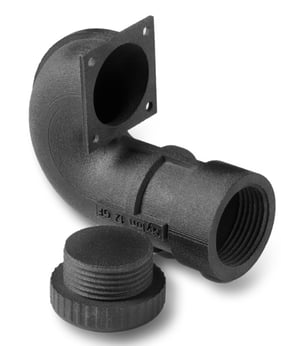
A U-shaped duct printed on the Formlabs Fuse 1+ 30W out of the Nylon 12 GF material.
What this partnership means for CADimensions customers
Adding Formlabs to our lineup means more options at more price points, with the application support our customers expect from CADimensions. All required post-processing equipment is available through us as well, so you're not left to piece together a workflow on your own.
Whether you're prototyping a new product, producing end-use components, or evaluating in-house printing for the first time, we're here to help you figure out which machine and materials make sense for your specific application. That's always been the CADimensions approach, and this partnership makes it possible to deliver it across a wider range of needs.
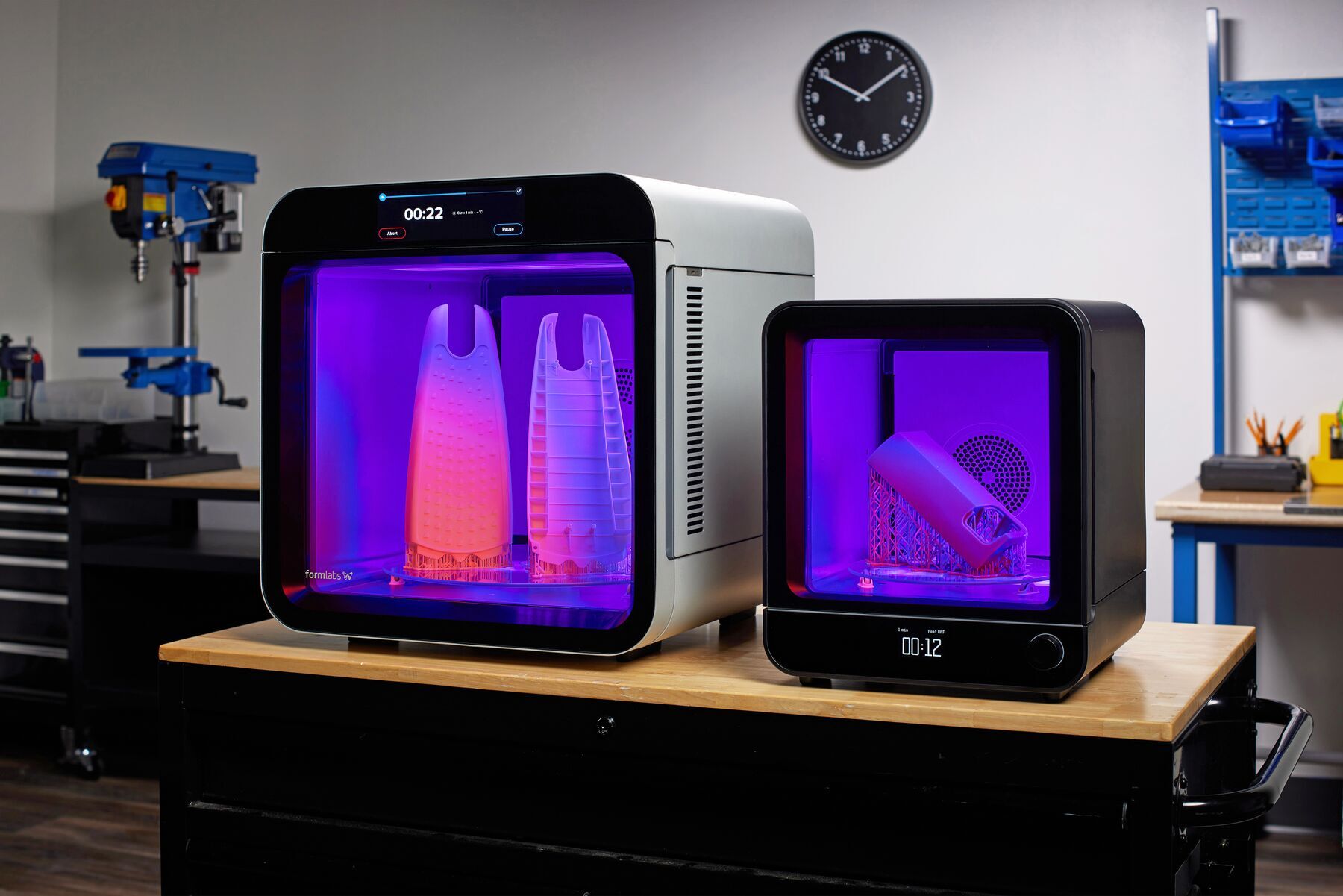
Ready to explore what Formlabs can do for your team?
Browse the full Formlabs lineup at CADimensions to see printers, materials, and post-processing equipment in one place.

Common questions about Formlabs printers at CADimensions
What is the difference between the Form 4 and the Form 4B?
The Form 4B shares the same technical foundation as the Form 4 but adds biocompatible materials for medical and dental applications, including BioMed Flex 80A, Permanent Crown, and Surgical Guide resins. The Form 4 is a general-purpose option. The Form 4B is designed for healthcare and dental use.
Does the Formlabs Fuse series require support structures?
No. On the Fuse series, excess powder acts as support material during the print. There is no need to manually remove supports or purchase a separate support material.
Can CADimensions supply post-processing equipment for Formlabs printers?
Yes. All required post-processing equipment is available through CADimensions.
What materials are available on the Formlabs Fuse series?
The Fuse series supports Nylon 11, Nylon 12, and TPU. Composite options include Nylon 11 CF (carbon fiber-filled) and Nylon 12 GF (glass-filled). The TPU material has a shore hardness of 90A.
.png)